Five Hidden Gems in Portugal You Have Never Heard Of
Portugal draws millions of visitors each year, many of whom gravitate toward the vibrant streets of Lisbon and the wine cellars of Porto. While these cities offer undeniable charm, there is another side of the country that remains less frequented. Quiet villages, medieval fortresses, and unspoiled coastal paths await those who venture beyond the well-trodden routes. This article introduces five remarkable places that offer a different perspective on Portugal, each with its own character and stories to tell.
For travelers seeking a slower pace and a deeper connection with local traditions, these hidden gems provide an opportunity to experience Portuguese culture away from crowded attractions. Whether walking through cobbled alleys carved into granite slopes or following a cliffside trail along the Atlantic, each destination invites exploration on its own terms. The following sections highlight the features, historical background, and practical aspects of visiting these lesser-known locales.
Wander Compass has curated this selection to help readers discover places that retain their authenticity. The aim is not to replace famous landmarks but to complement them with experiences that prioritize context and atmosphere. Each location was chosen for its cultural significance, natural beauty, and relative quietness compared to major tourist hubs.
Monsanto: The Granite Village
Perched on a hillside in the municipality of Idanha-a-Nova, Monsanto is often described as the most Portuguese village in Portugal. Its defining feature is the enormous granite boulders that seem to grow out of the houses themselves. Some structures are built around, under, or between these rocks, creating an organic blend of nature and human architecture. The village’s layout dates back centuries, and its narrow, winding streets invite unhurried strolls.
The castle ruins at the top of the hill offer panoramic views of the surrounding plains and the border with Spain. Visitors who make the climb can observe how the fortress was integrated into the rocky terrain. Monsanto also hosts a unique annual tradition called the Festa das Cruzes, during which residents decorate the streets with paper flowers and crosses. For those interested in vernacular architecture and medieval history, this village provides a tangible link to the past. Accommodations are limited, so planning a day trip from Castelo Branco or staying in a nearby rural guesthouse is a practical approach.
Piódão: A Schist Hamlet in the Açor Mountains
Nestled in the Serra do Açor, Piódão is one of the most striking examples of the schist villages scattered across central Portugal. The village’s houses, built from dark gray schist stone with blue-painted doors and windows, cascade down a steep valley. The narrow streets are paved with irregular stone slabs, and the lack of modern signage preserves the sense of stepping back in time. The main square is dominated by the small whitewashed Igreja Matriz, which contrasts sharply with the dark surroundings.
Hiking trails connect Piódão to other schist villages in the region, allowing visitors to explore the mountainous landscape at their own pace. The surrounding forest is home to oaks, chestnuts, and Mediterranean shrubs. Because the village is located at an altitude of around 700 meters, the climate is cooler than in the lowlands, making it a pleasant stop during summer months. There are a few family-run restaurants where one can try regional dishes such as chanfana (goat stew cooked in a clay pot). Piódão is accessible by car via winding mountain roads, and parking is available outside the village center to preserve its pedestrian character.
Sortelha: A Medieval Fortress Frozen in Time
Located in the Guarda district near the Spanish border, Sortelha is one of the best-preserved medieval villages in Portugal. Surrounded by a fortified wall and perched on a granite outcrop, the village has changed little since the fifteenth century. The cobblestone main street leads up to the keep of the castle, which offers views of the surrounding hills and agricultural terraces. The old pillory, built from a single granite block, stands in the central square as a symbol of municipal authority from the medieval period.
Walking through Sortelha reveals details such as Manueline windows, stone arches, and doorways carved into the rock. The village is small enough to explore in a couple of hours, but the atmosphere encourages lingering. There is a small museum that explains the history of the region and the role of the Knights Templar in its development. Sortelha is also part of the Aldeias Históricas de Portugal network, which provides information about other fortified villages in the area. Visitors should note that the terrain is uneven and can be slippery after rain, so sturdy footwear is recommended.
Castelo de Almourol: A Templar Fortress on an Island
Rising from a small rocky island in the middle of the Tagus River, Castelo de Almourol is one of the most atmospheric castles in Portugal. Although its origins date back to Roman times, the current structure was rebuilt by the Knights Templar in the twelfth century. Accessible only by a short boat ride from the riverbank near the village of Tancos, the castle presents a striking silhouette against the sky. The interior consists of a central courtyard, a chapel, and several towers that can be climbed for views over the river and the surrounding countryside.
The site is managed by the Instituto de Gestão do Património Arquitetónico e Arqueológico, and guided tours are available that explain the strategic importance of the fortress during the Christian reconquest. Because the castle is located on an island, it remains free from the noise of traffic and crowds. The crossing by ferry is included in the entrance fee and takes only a few minutes. For photographers and history enthusiasts, Almourol offers a unique combination of natural setting and military architecture. It is advisable to check the opening hours in advance, as they vary seasonally.
The Fishermen’s Trail on the Costa Vicentina
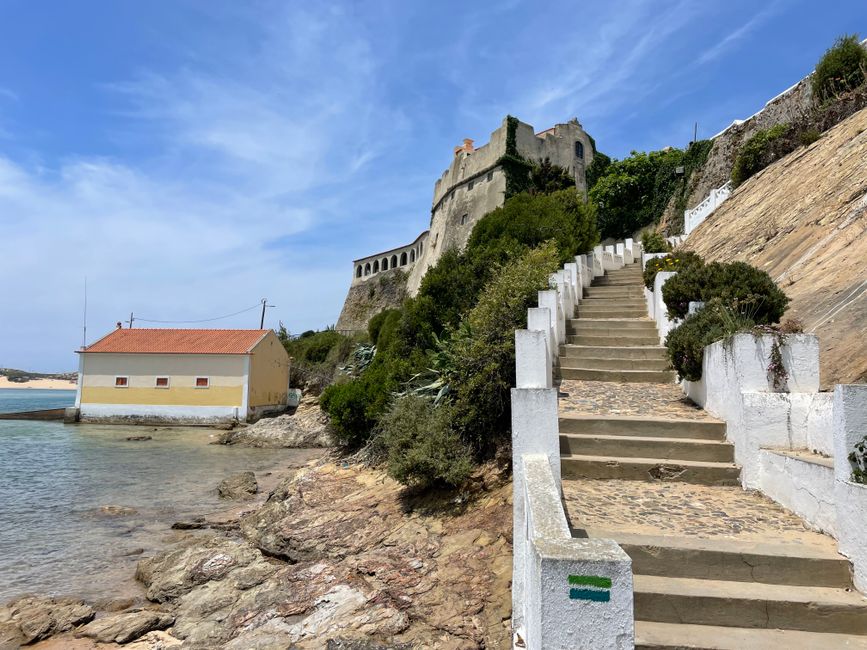
Stretching along the southwestern coast of Portugal, the Fishermen’s Trail (Trilho dos Pescadores) is a section of the longer Rota Vicentina. It follows the cliffs and beaches between Porto Covo and Odeceixe, passing through landscapes that have remained largely untouched by tourism. The trail passes small fishing communities, dunes, and protected nature reserves. Unlike the crowded beaches of the Algarve, this coastline offers solitude and a raw natural beauty.
Hikers can choose to walk individual segments or complete the entire 75-kilometer route over several days. The path is well-marked and passes through villages where basic accommodations and supplies are available. Birdwatchers may spot storks, gulls, and migratory species along the way. The ocean views are constant, and the sound of the waves accompanies most of the journey. Because the trail runs along soft sand and rocky sections in parts, appropriate footwear and sun protection are necessary. The best time to visit is spring or autumn, when temperatures are moderate and the landscape is green.